
Natural/plant based dish soap
The non-toxic way to wash your dishes
Nowadays our war on germs is really making things worse. Studies have shown that children brought up in over-cleaned houses are more likely to develop allergies, asthma, or eczema as a result of synthetic chemicals, the best you can do for sensitive baby skin is not to cover it with chemicals, by washing nappies with pure soap and warm water. It’s a great idea to make your non-toxic cleansers with simple ingredients like baking soda and vinegar.
Health and safety are great reasons to choose a natural/green detergent. The chemicals in these cleaners are meant to disinfect our dishes but, many of them contribute to indoor air pollution, can be harmful if inhaled or touched, and they are poisonous if ingested. Some may cause immediate hazards such as skin or respiratory irritation, watery eyes, or chemical burns, and others are associated with chronic, or long-term effects such as cancer.
Why not Phosphates or Chlorine?
Phosphates are water-softening mineral corrosive additives that were once widely used in laundry detergents to enhance the performance of surfactants. They can cause nausea, vomiting and diarrhea if ingested and it can cause severe skin irritation. When phosphates enter waterways, they act as a fertilizer, spawning overgrowth of algae. This overabundance of aquatic plant life eventually depletes the water’s oxygen supply, killing off fish and other organisms.
Chlorine bleach is highly toxic-caustic and may cause skin irritation and redness. It can irritate eyes, nose and airways, and its fumes can be fatal if is swallowed. When this chemical is combined with other cleaners that contain ammonia it can cause toxic gases to form which is also bad for the environment. When chlorine bleach is combined with carbon molecules creates harmful organochlorines such as dioxin and, dioxin is a known carcinogen.
Sodium laureate sulfate (SLES) and sodium laurel sulfate(SLS) are common foaming agent surfactants, usually derived from coconut, both of them produce bubbles in your dish soap, they are usually found in “natural brands” SLES is not recommended but SLS is okay to use. There are other newer coconut-derived surfactants, such as potassium cocoate, that are safer.
Food-grade coloring is implicated in behavioural issues in kids. To me, the colour does not really matter when it comes to safety and health regarding my dish soap.
Artificial fragrances or scents probably contains phthalates, which has hormone-disrupture effects unless the manufacturers specify that they only use essential oils. Even phthalate-free synthetic fragrances usually are petroleum-derived and contain undisclosed chemicals.
You may see “triclosan” listed on the label known as an antibacterial agent, that stuff is totally toxic, carcinogenic, hormone-disrupting and also contributes to the antibiotic-resistant “super bugs” that are becoming a real problem.
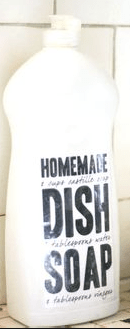
I want to share with you this great natural Dish soap from www.practiganic.com
DIY Homemade Dish Soap:
1 3/4 cups water
1/4 cup grated castile bar soap, tightly packed
1/4 cup + 2 T liquid castile soap
2 t super washing soda
1 t vegetable glycerin
30-40 drops essential oil (I use 20 lemon to help cut the grease, 10 lavender and 10 tea tree)
 Healthy mom & baby